
The Black Creek Barns Esopus, NY / Under Construction
Between 2010 and 2019, the Hudson Valley experienced a cultural shift often described as “Rurbanism,” as urban transplants brought their cultural touchstones, creative energy, and expectations for design and experience to the region. What began as a weekender movement evolved into something more permanent—an alternative to legacy resort models, rooted in landscape, craft, and authenticity. Black Creek Barns is rooted in this cultural and geographic evolution.
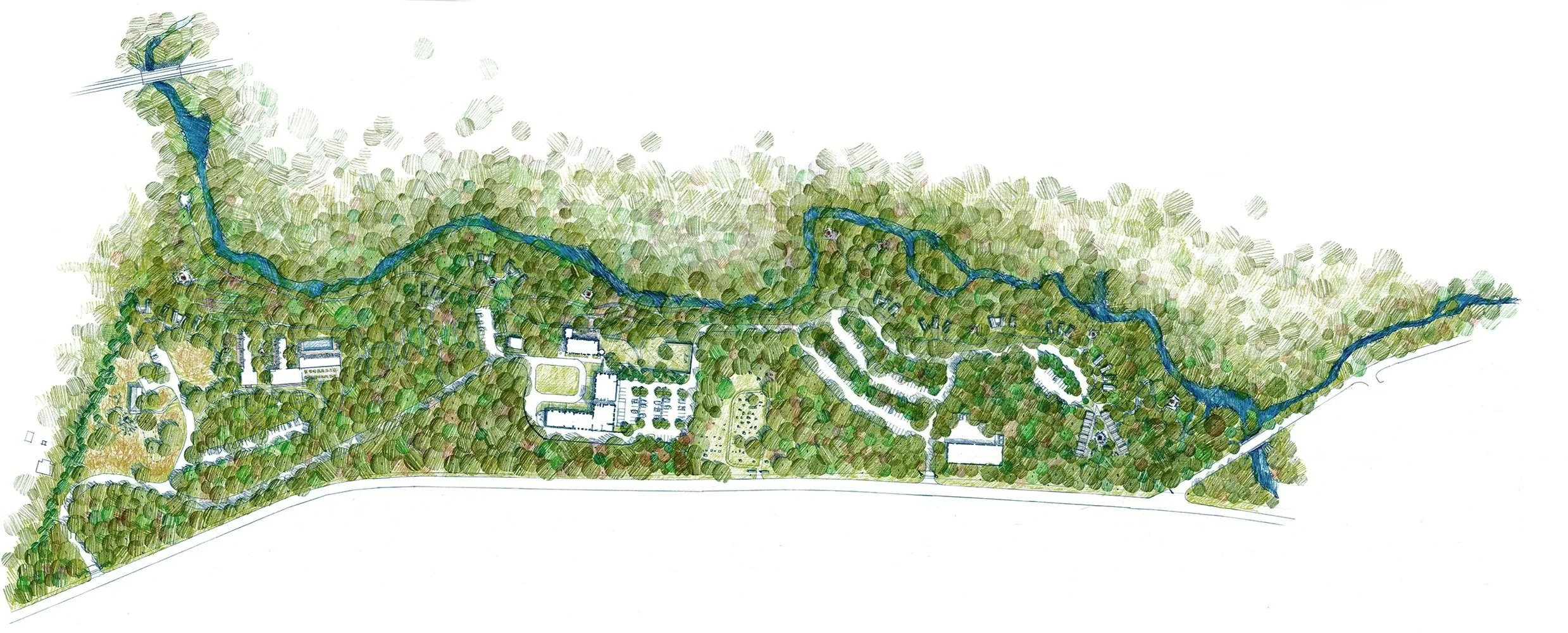
Spanning 153 acres, the Active Rest & Restoration Campus is conceived as a place dedicated to the art of active rest—restoration achieved through engagement, movement, making, and time spent outdoors. The campus is designed for makers, doers, and people who feel most restored when their hands and minds are fully engaged. Rather than centering around exclusivity or status, the campus is organized around shared experience, creative production, and meaningful connection to the landscape.
The project positions itself as a contemporary alternative to the traditional country club model. Instead of separation, it fosters openness. Instead of passive consumption, it prioritizes participation. Workshops, studios, gardens, and performance spaces create outlets for learning and personal expression, while trails, open fields, and forested enclaves ensure continuous access to nature and opportunities for physical and mental restoration. The campus operates as a regional hub—welcoming locals, weekenders, and visitors—and creates a flexible framework of gathering spaces that support everything from quiet daily rituals to large communal events.
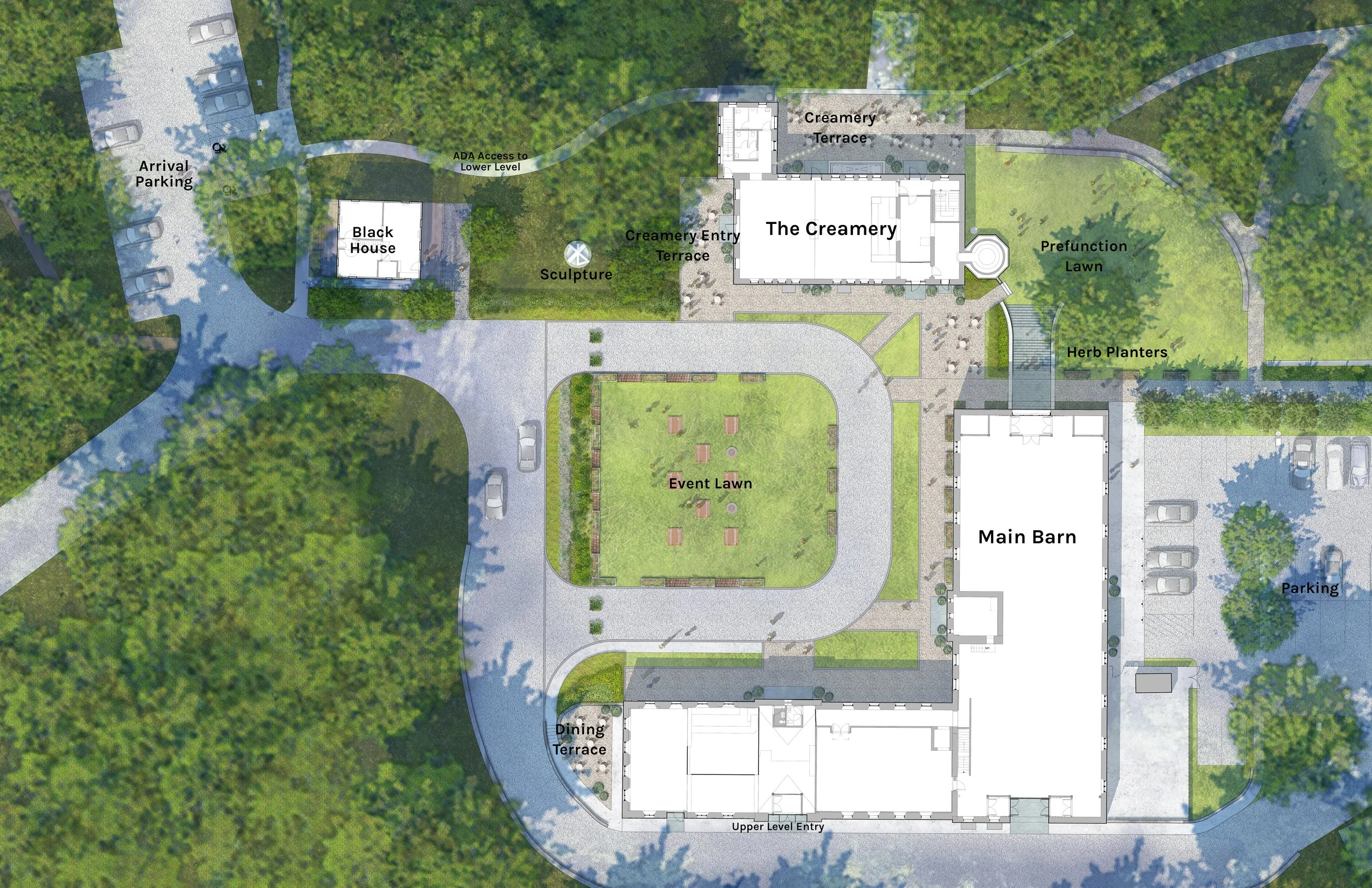
Arrival at the property is defined by a gradual transition from dense woodland into open landscape. The entry drive passes through preserved tree stands before opening into a central glade that sets the tone and first impression. Clearing and grading have been carefully managed to preserve woodland character while creating framed views and moments of release. Meadow seeding and lawn establishment reinforce the landscape's pastoral quality, while conifer plantings along the southern edge provide year-round screening and wind protection. Selective understory clearing improves access to bluffside cabins while maintaining canopy continuity, and the central lawn is designed to serve as both an event landscape and an informal recreation field.
Along the bluff and around the Coop House, guest cabins are integrated into existing tree stands using a light-touch approach that preserves woodland structure and minimizes disturbance. Utilities and foundations are carefully threaded through root zones and existing clearings. Bluestone terraces are forming around gathering areas, including the bluffside pool terrace where an infinity edge aligns with long views across the valley. Retaining systems stabilize grade transitions, while woodland paths connect cabins, overlooks, and shared outdoor rooms. Garden spaces are currently being formed through grading and soil preparation, establishing the foundation for layered planting and seasonal occupation.
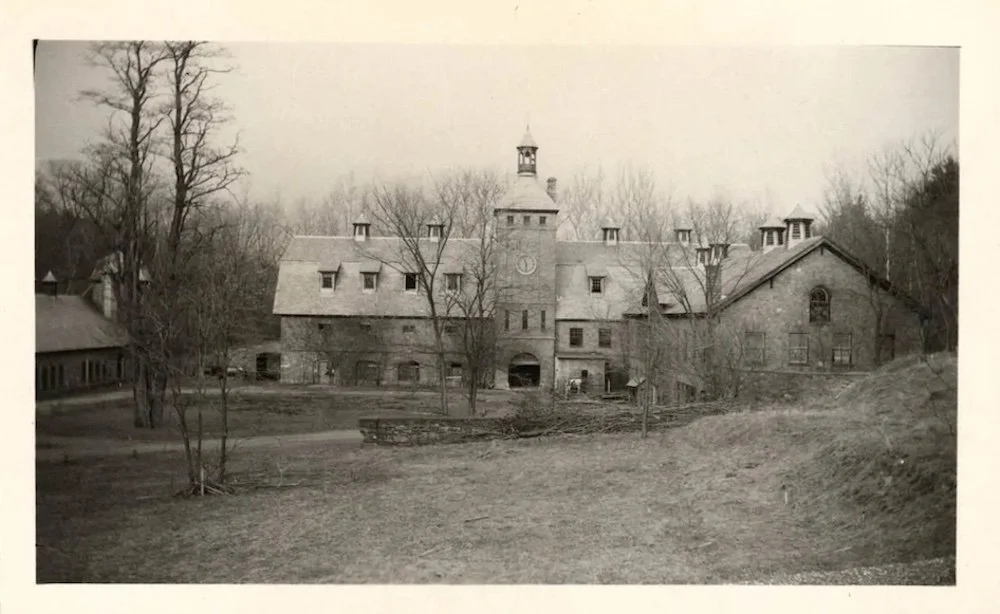
At the center of the campus, the Barns complex is emerging as the property’s ceremonial and social heart. The central courtyard lawn anchors a composition of historic and adapted structures, creating a shared landscape for gathering, dining, and programming. Bluestone entry courts and dining terraces extend directly from the Main Barn, reinforcing the relationship between interior craft and outdoor life. Pathways resolve grade changes while strengthening connections to the Creamery and lower-level terraces, including a west-facing bluestone overlook positioned above the creek.
Within the riparian woodland north of the bluff, restoration work is revealing long-obscured views of the creek while protecting mature canopy trees. Selective understory thinning improves ecological health and spatial clarity, while new trail connections link cabins, parking areas, and creekside gathering spaces. Conifer plantings buffer arrival zones without disrupting the immersive woodland character. New cabins in this zone are being installed with a minimal footprint, reinforcing the sense of retreat within the forest.
Across the campus, the landscape is conceived as both framework and experience—supporting daily life, seasonal programming, and long-term ecological resilience. Black Creek Barns is not designed as a static destination, but as a living landscape where making, movement, gathering, and restoration are inseparable. It is a place where productivity and play coexist, where landscape drives experience, and where community is built through shared time outdoors.
Client I Emerson Hospitality
Architect | Garrison Architects