River House / On the Boards
At River House, the landscape is treated first as a continuous arboreal field, a living canopy system that defines space through light, shadow, seasonality, and depth rather than through constructed edges. The project does not begin with objects placed into a site; it begins with reading the existing woodland mass as atmosphere, as structure, as memory.
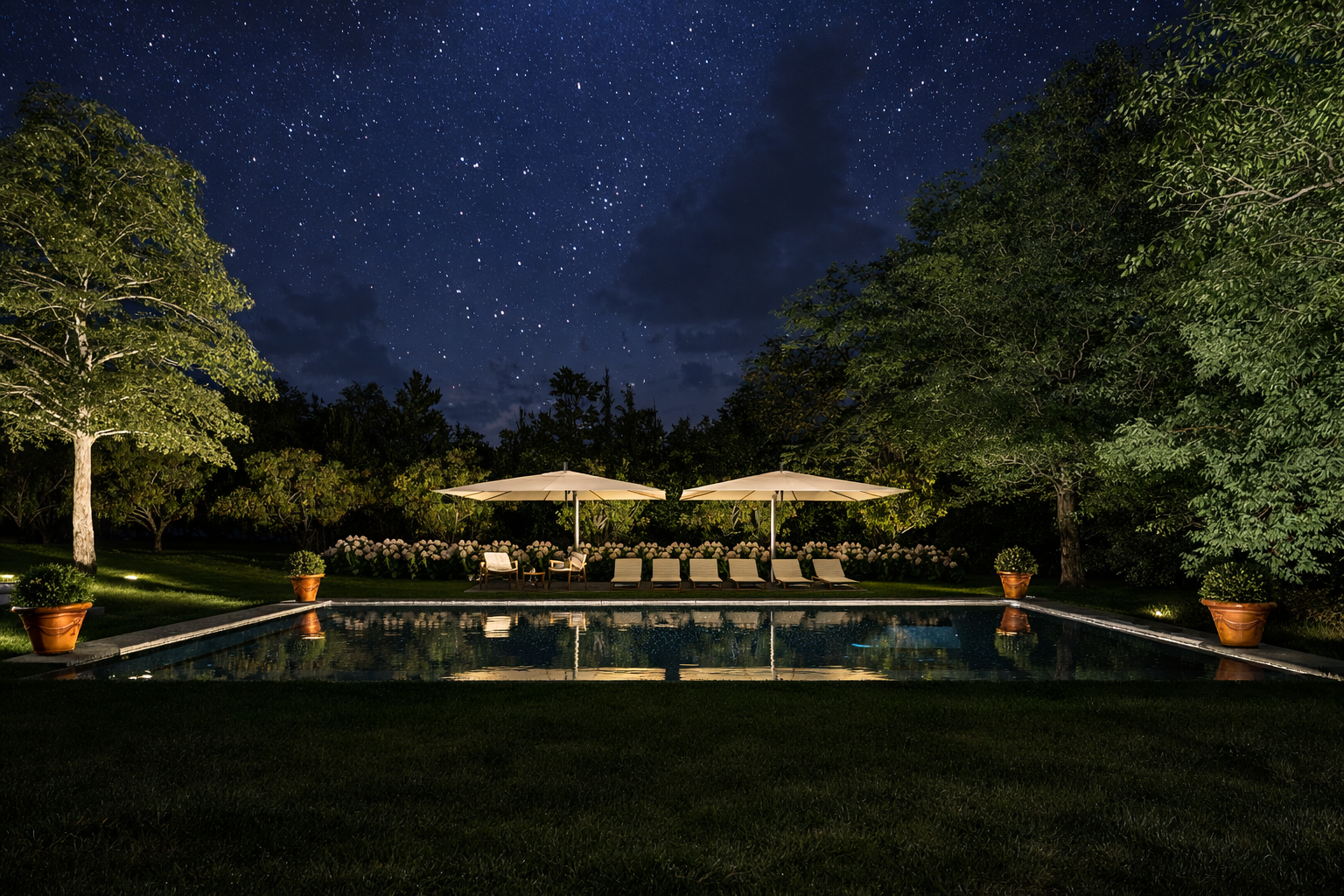
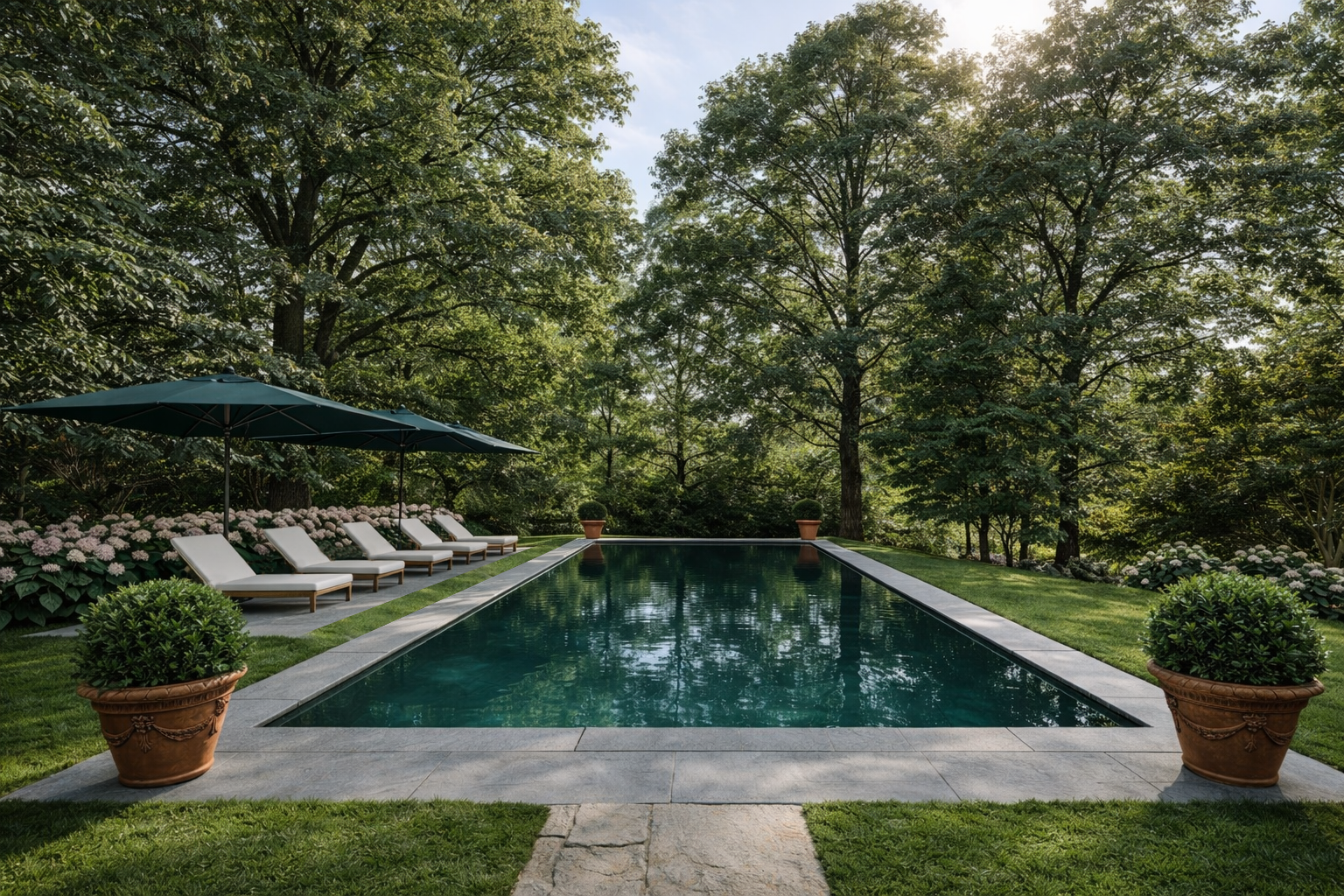
Within this field, the pool is conceived as an incision, a precise, intentional cut into an otherwise continuous ecological fabric. It is not a recreational object dropped into a clearing. It is a moment of subtraction. A removal. A controlled void that reveals sky, reflects canopy, and creates a horizontal datum against the verticality of trunks and understory.
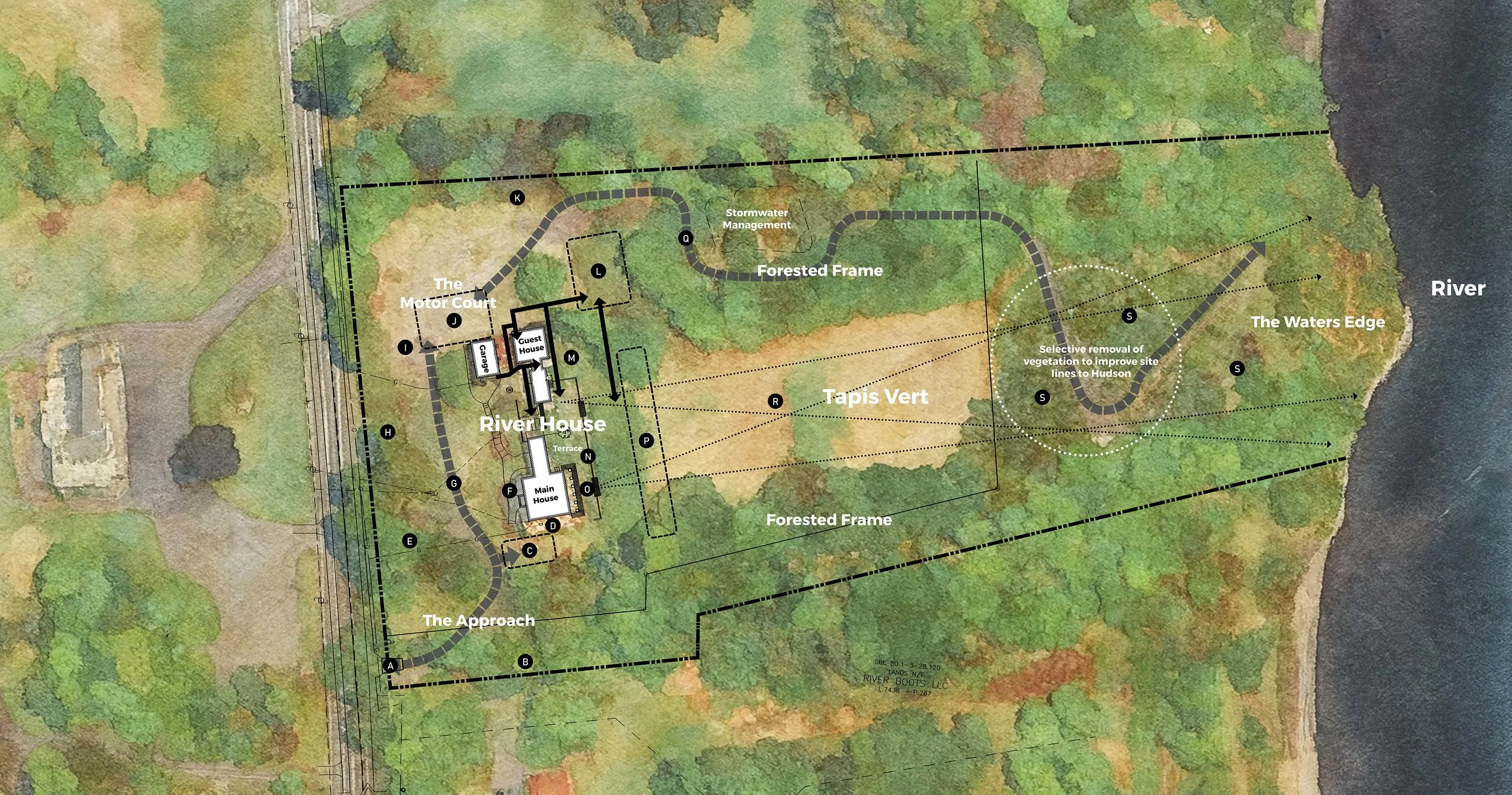
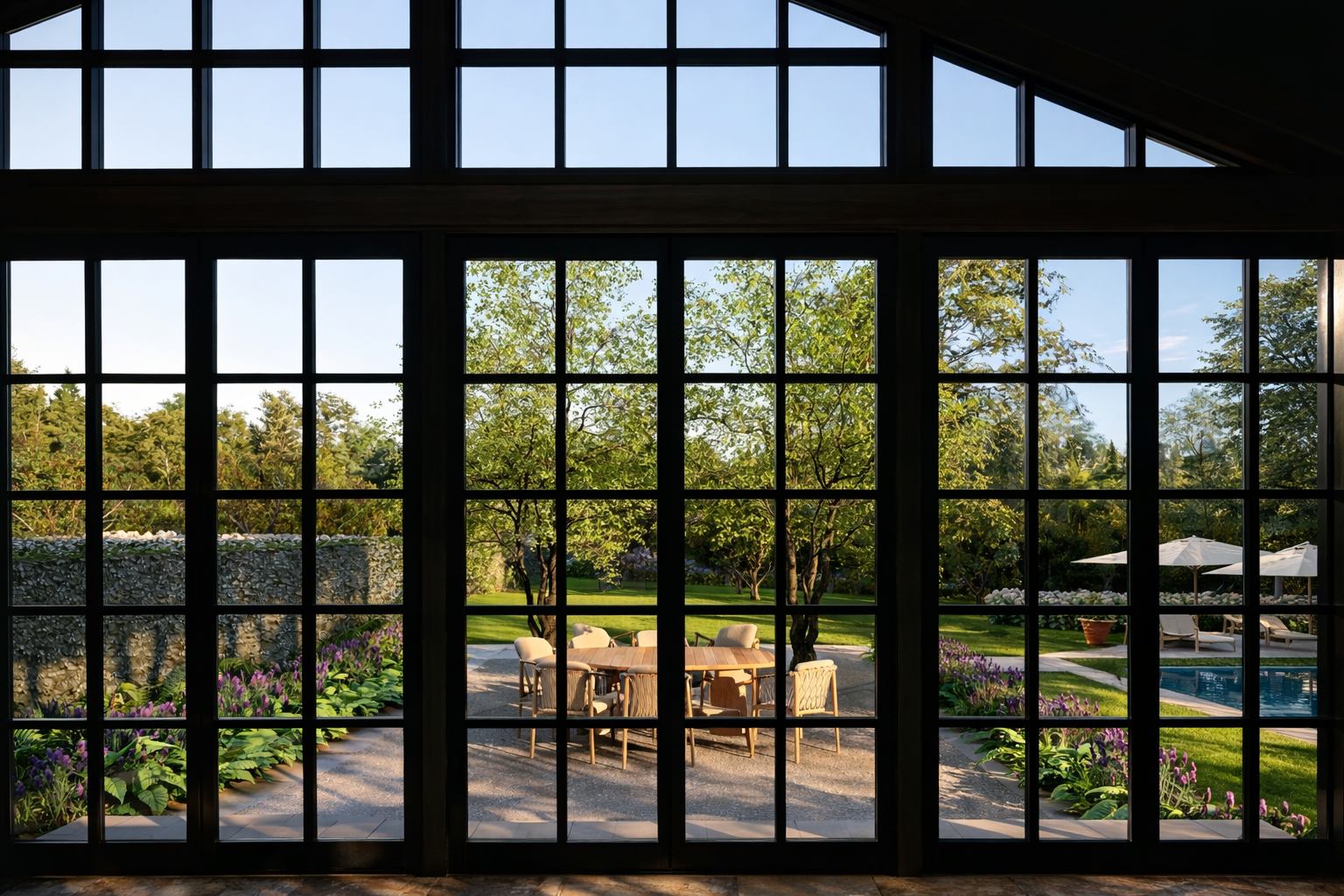
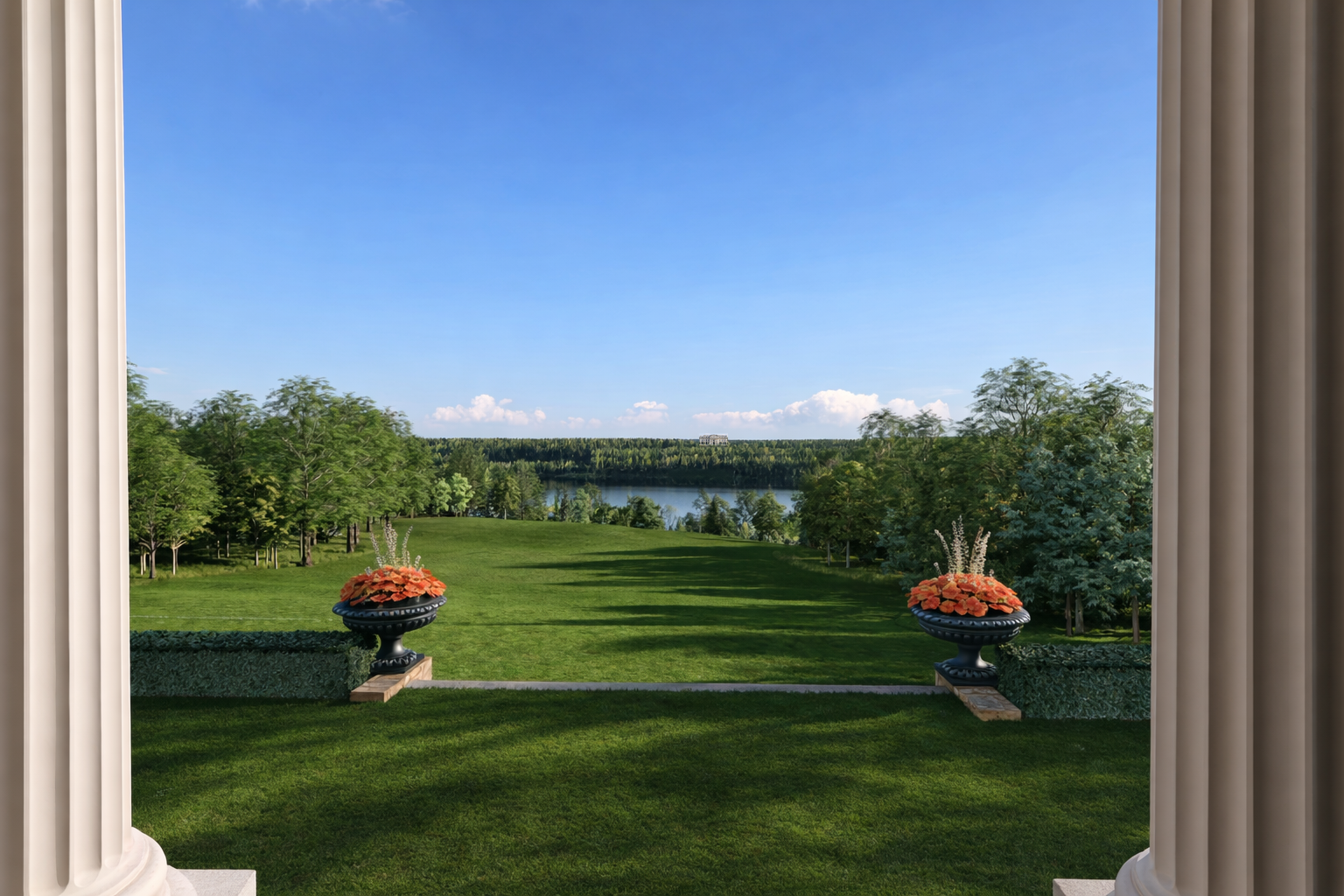
This incision establishes the estate’s primary spatial ordering system. From the house terrace, the landscape appears as layered bands: architecture, hardscape threshold, cultivated garden rooms, and, finally, the deep arboreal edge dissolving toward the distant water horizon. The pool sits exactly at the point where domestic space gives way to landscape immersion — simultaneously foreground object and middle-ground reflector.
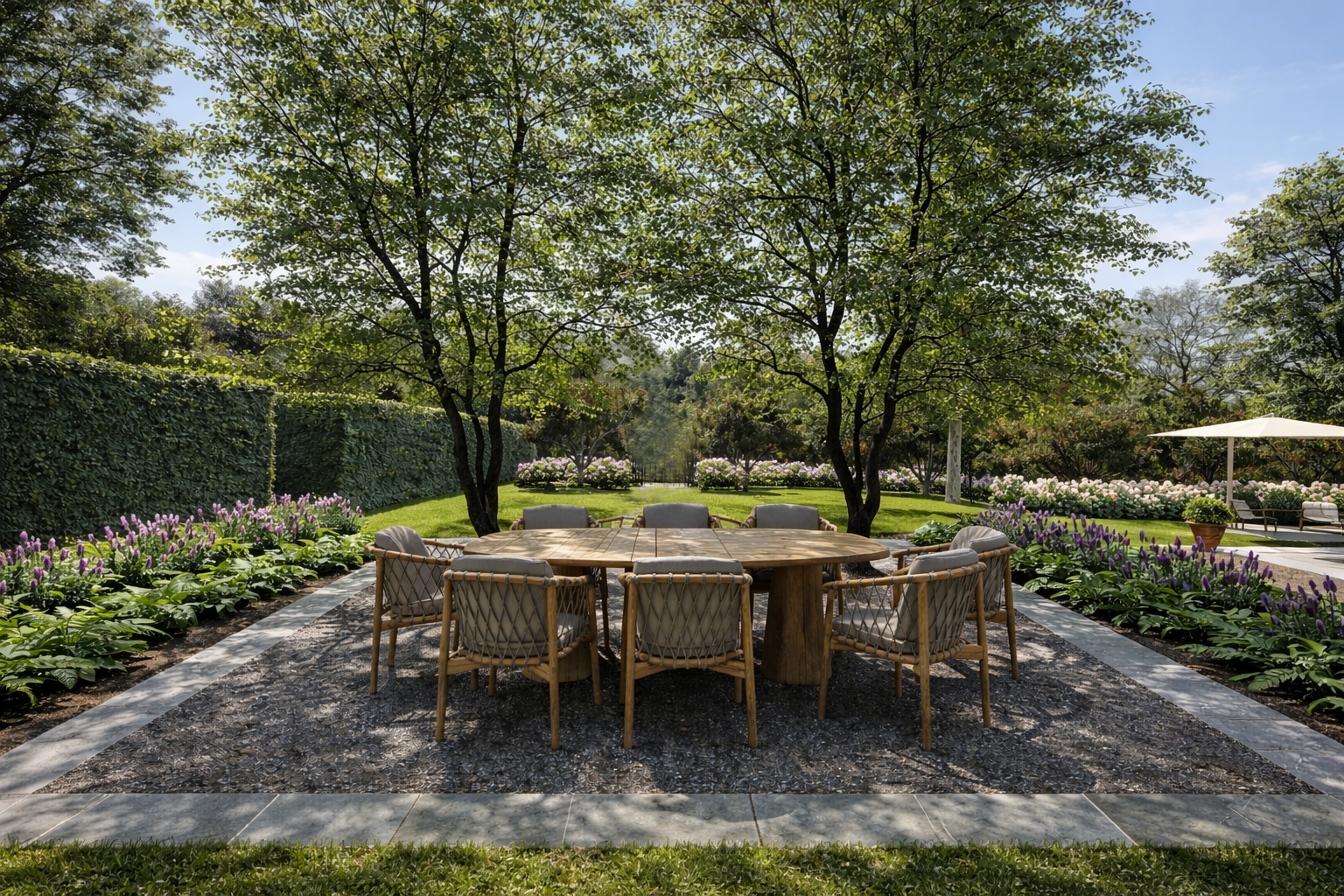
The broader landscape strategy reinforces this idea of selective cutting and controlled release. Orchard rooms, hedged passages, and lawn clearings are not decorative gestures; they are spatial edits made to heighten awareness of the surrounding forest mass. The result is a sequence of compression and release, from a shaded enclosure to open sky, from a dense hedge to a long horizon, from a tactile ground plane to a reflective water surface.
Circulation follows this logic. Paths feel discovered rather than announced. Approaches are axial only when they need to anchor architecture or frame water views; elsewhere, they soften into the woodland grain. Outdoor rooms are nested within canopy edges, so use always occurs at the seam between cultivated and wild areas.
Material expression remains quiet and durable, stone, metal, and gravel tones that sit comfortably within the Hudson Valley palette. Planting favors a layered deciduous canopy, filtered understory, and seasonal meadow moments that reinforce the idea that this is first a forested property with a residence inserted into it, not the reverse.
From the air, the project reads as a network of clearings carved into a continuous tree field. From the ground, it reads as a sequence of intimate, inhabitable edges. From the water, it reads as a beacon emerging carefully from woodland.
The project ultimately positions domestic life within ecology rather than adjacent to it. The incision in the pool becomes both metaphor and instrument, a precise gesture that makes the surrounding living field more legible, more present, and more experiential. The overall vision aligns with the original Aberdeen schematic landscape framework and spatial organization shown in the project design package.
Client | Confidential
Design Architect | TenBerke