Miss Miami & the Miami Beach Mullet Miami Beach, New Jersey
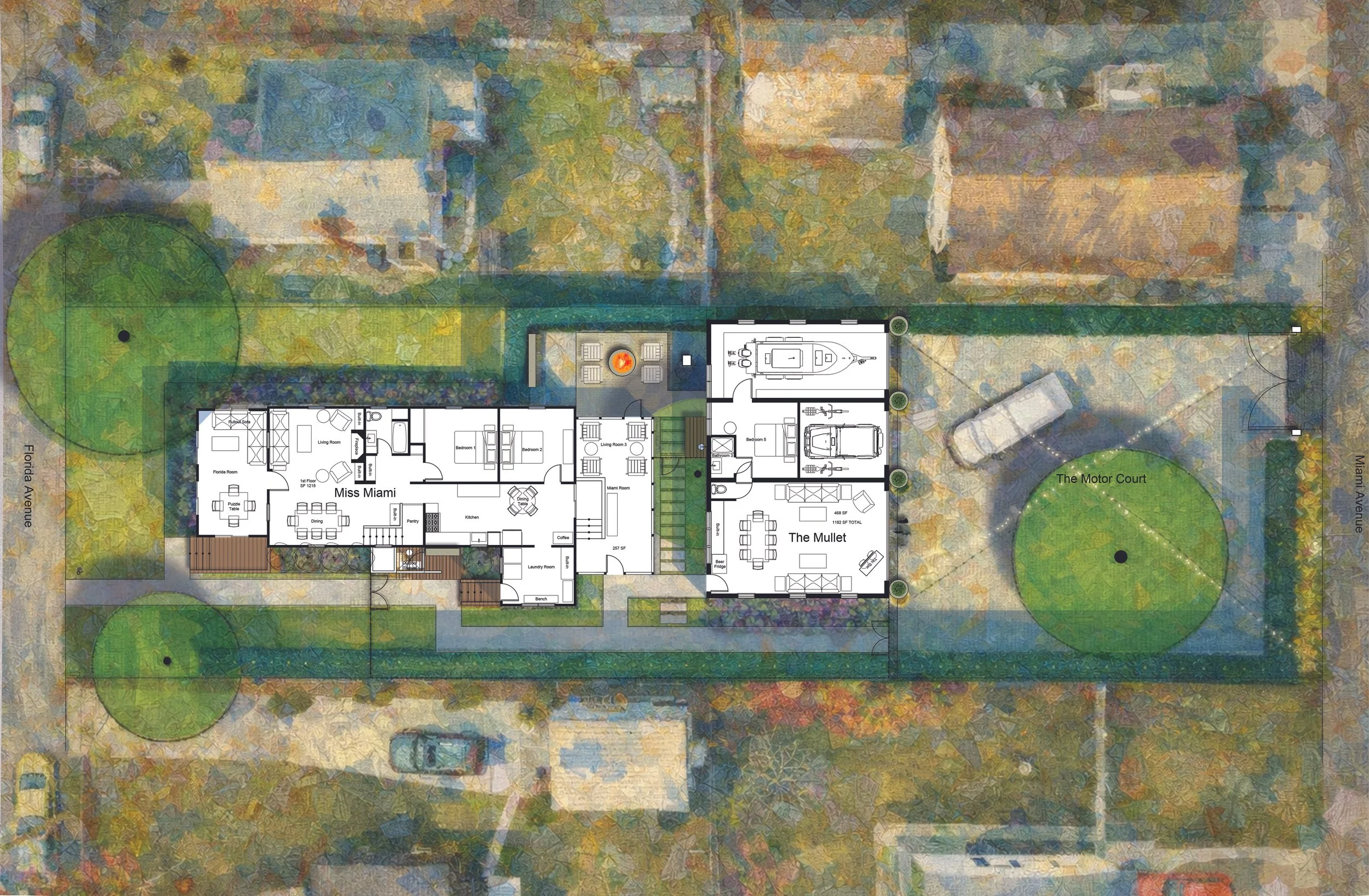
Set along the quiet coastal grain of Miami Beach, New Jersey, the Miami Beach Mullet reimagines the classic shore property as a layered social landscape—part coastal retreat, part neighborhood gathering space, and part working hospitality environment. The project blends residential life, guest experience, and outdoor living into a single, highly curated site composition that feels both effortless and deeply intentional.
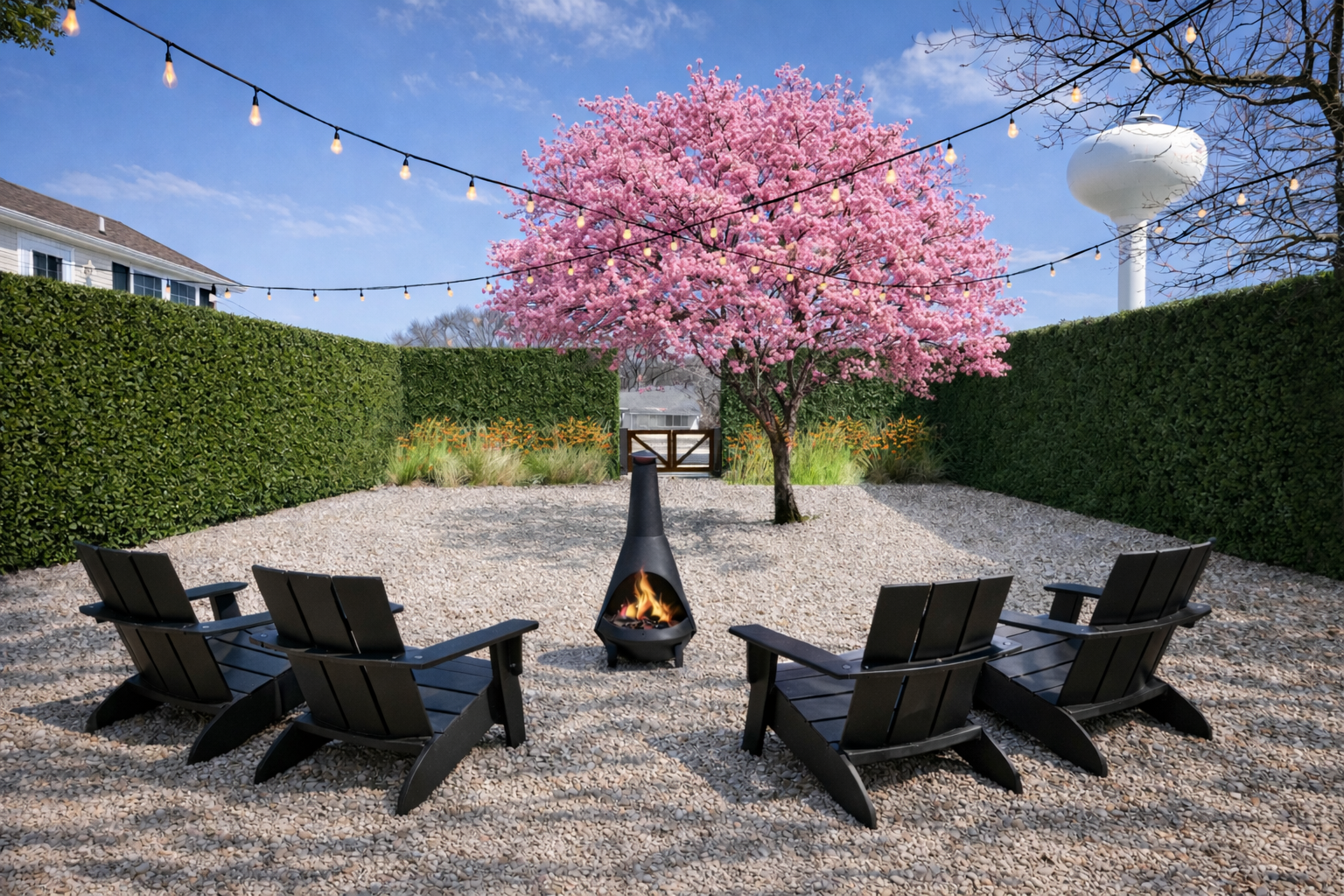
At its core, the design embraces a distinctly coastal material language. Oyster-shell gravel motor courts, clipped cedar hedges, reclaimed-stone curbing, and weather-tolerant plantings create a landscape that feels rooted in Atlantic shore tradition while operating with contemporary precision. The landscape is designed to be durable, textural, and seasonally expressive—equally successful hosting summer gatherings, shoulder-season fireside evenings, or quiet winter occupancy.
The spatial organization reinforces the project’s dual identity. The “business in the front” condition is expressed through the public-facing Miss Miami component, an active, social frontage defined by hospitality energy, lighting, and visual identity. The “party in the back” emerges as a series of protected outdoor rooms anchored by the motor court and fire gathering spaces. Here, a flowering Kwanzan cherry canopy serves as both a seasonal spectacle and a spatial ceiling, casting dappled light across oyster shell surfaces and reinforcing the site’s intimate enclosure.
Lighting plays a critical experiential role. Overhead string lighting establishes a low, human-scaled ceiling that transforms the landscape at dusk, shifting the space from daytime coastal brightness to an evening social atmosphere. The result is a site that extends its usable hours while reinforcing the project’s hospitality DNA.
The planting strategy balances structure and softness. Evergreen hedges provide year-round enclosure and wind buffering, while seasonal flowering elements introduce moments of celebration and visual focus. Ornamental grasses and coastal-adapted perennials introduce movement and seasonal change, reinforcing the site’s connection to regional ecology.
Beyond aesthetics, the project prioritizes flexible use. The motor court operates as arrival space, event spillover, and informal gathering zone. Fire features and loose seating allow the landscape to recalibrate daily, from private family use to social entertaining to guest-focused hospitality programming. Ultimately, Miami Beach Mullet is about calibrated contrast: public and private, polished and relaxed, residential and social. The project demonstrates how a relatively compact coastal site can deliver layered experiences through precise material selection, strategic planting, and highly intentional spatial sequencing.
The result is a landscape that feels instantly familiar to the New Jersey shore while quietly elevating the expectations of what a small-scale coastal hospitality-residential hybrid can be.