Fiumicino Waterfront Master Plan Fiumicino, Italy / 2009
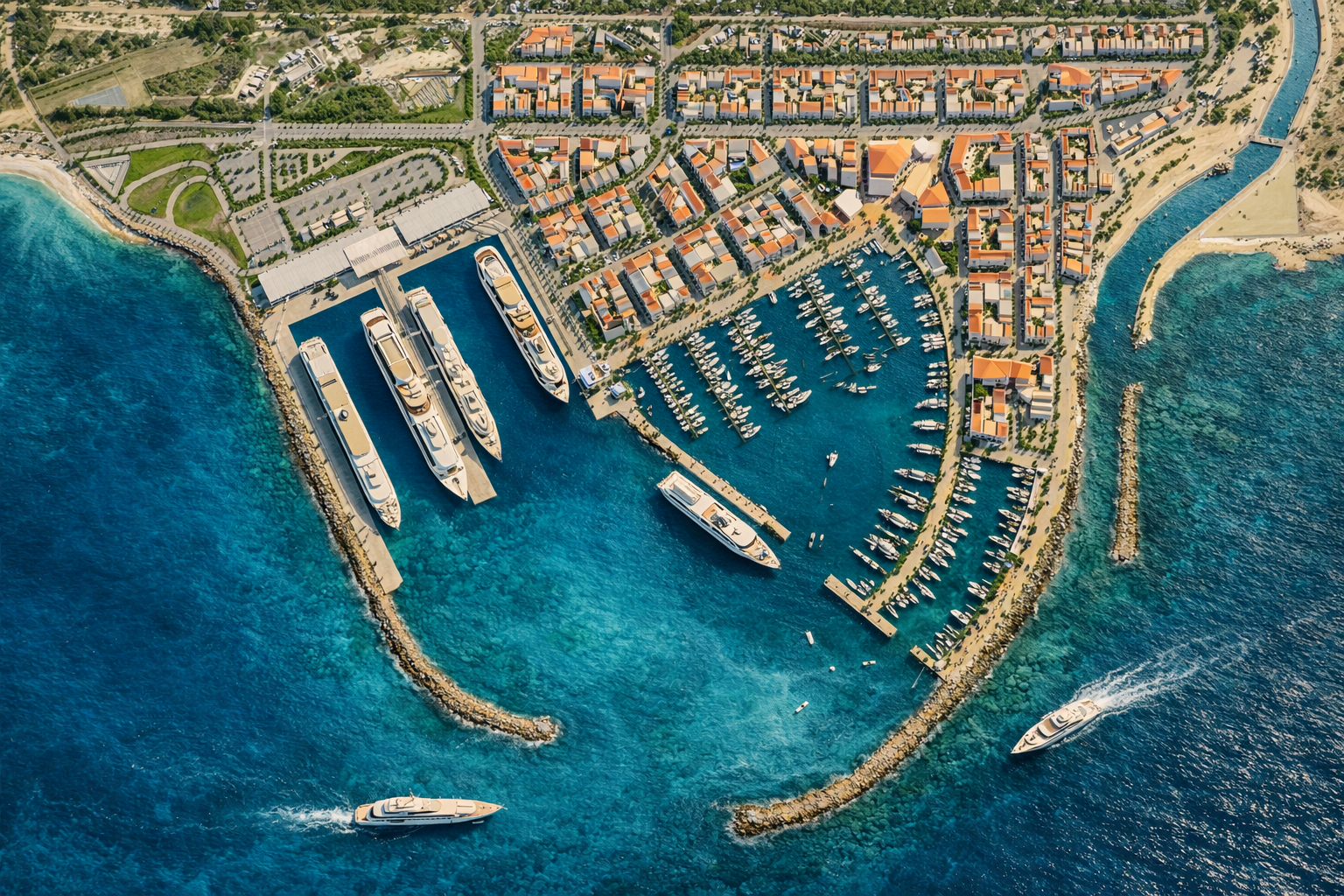
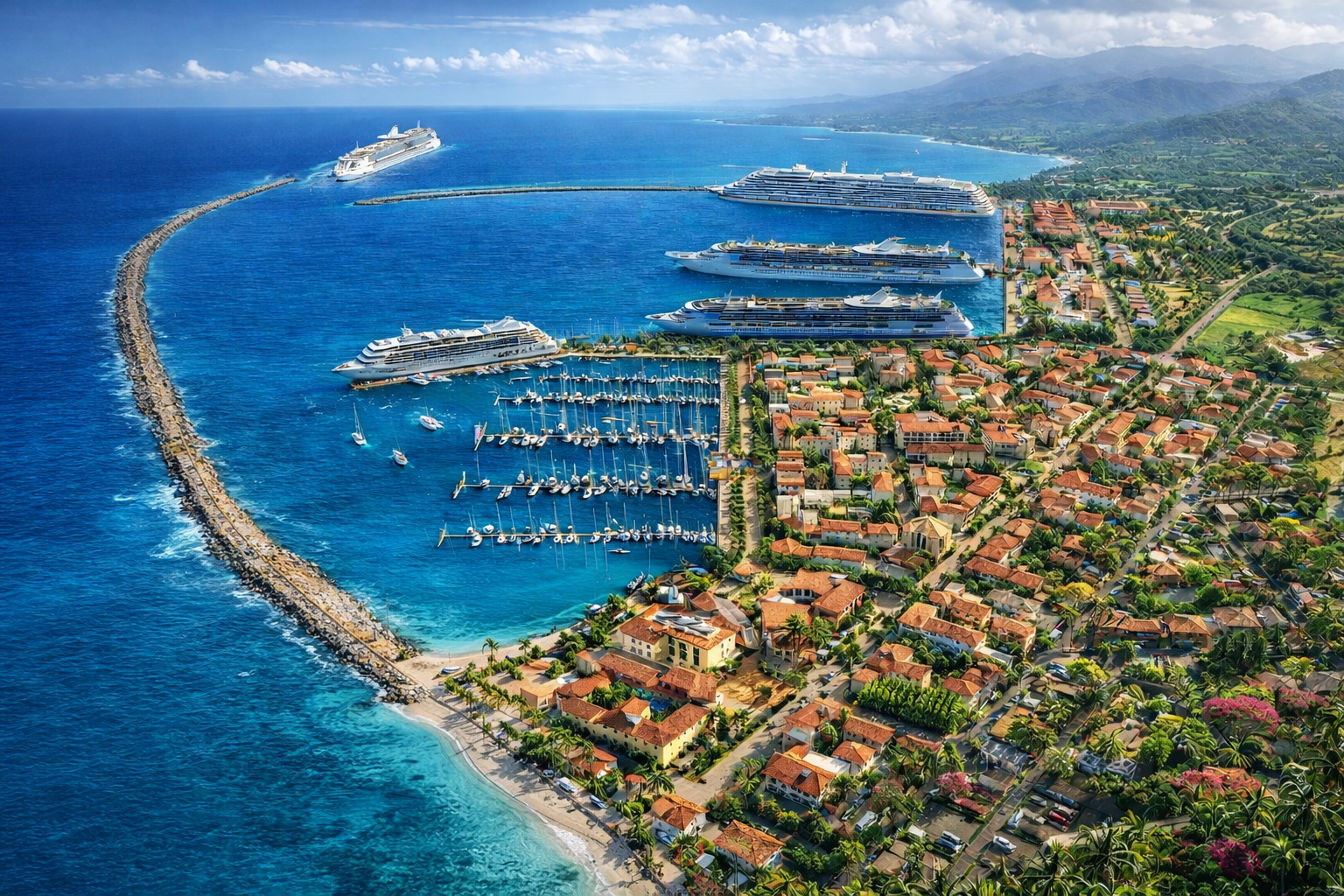
What began as a working harbor is re-imagined here as a civic waterfront, not a marina as an object, but a town that happens to meet the sea.
This project takes its cues from the spatial DNA of coastal Italy, where public life is not confined to parks alone but spills out into piazzas, promenades, stoops, steps, and quays. The harbor basin becomes the armature around which an urban maritime village is organized, a sequence of tight streets, shaded loggias, and sun-washed courts that resolve at the water’s edge into a layered civic room.
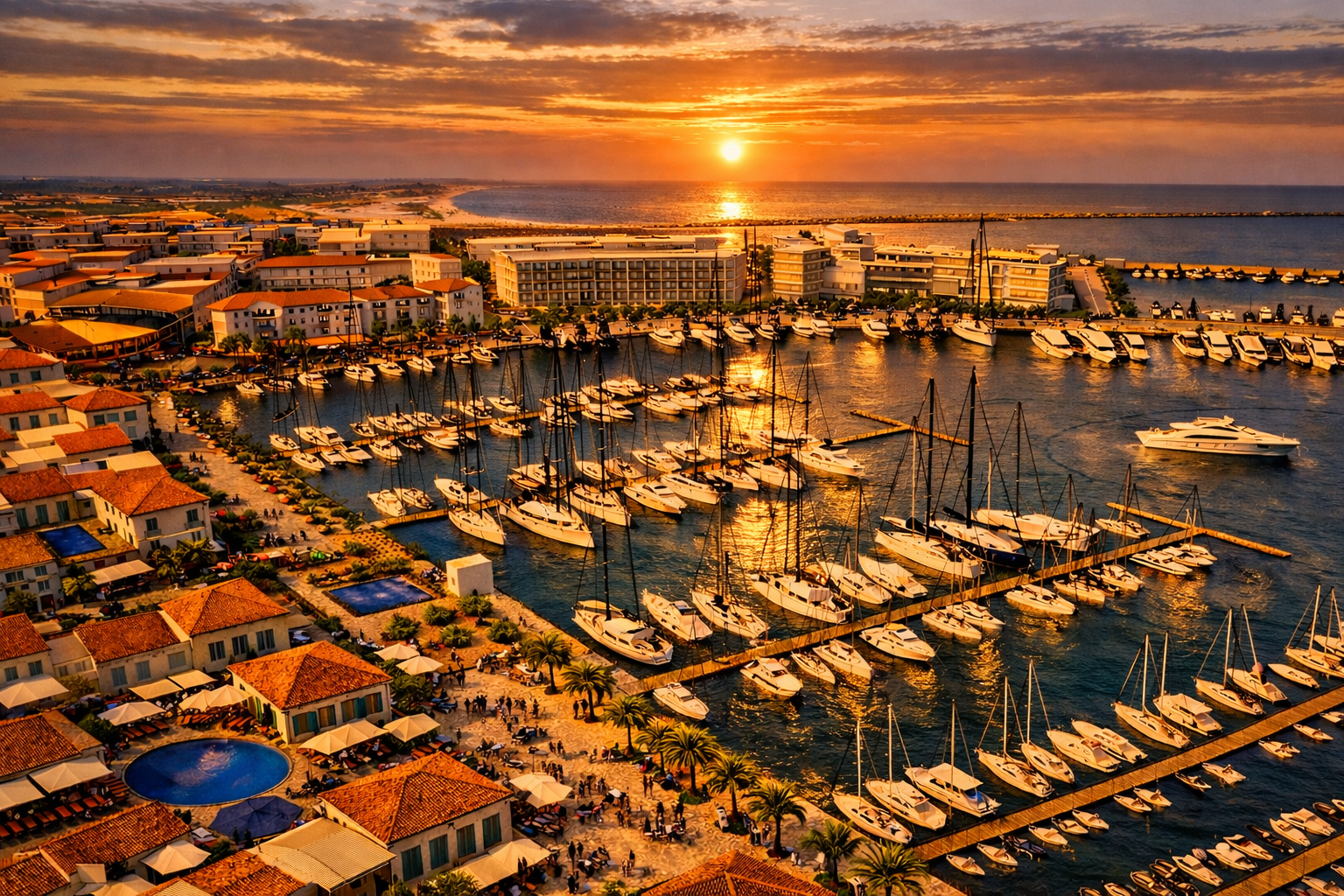
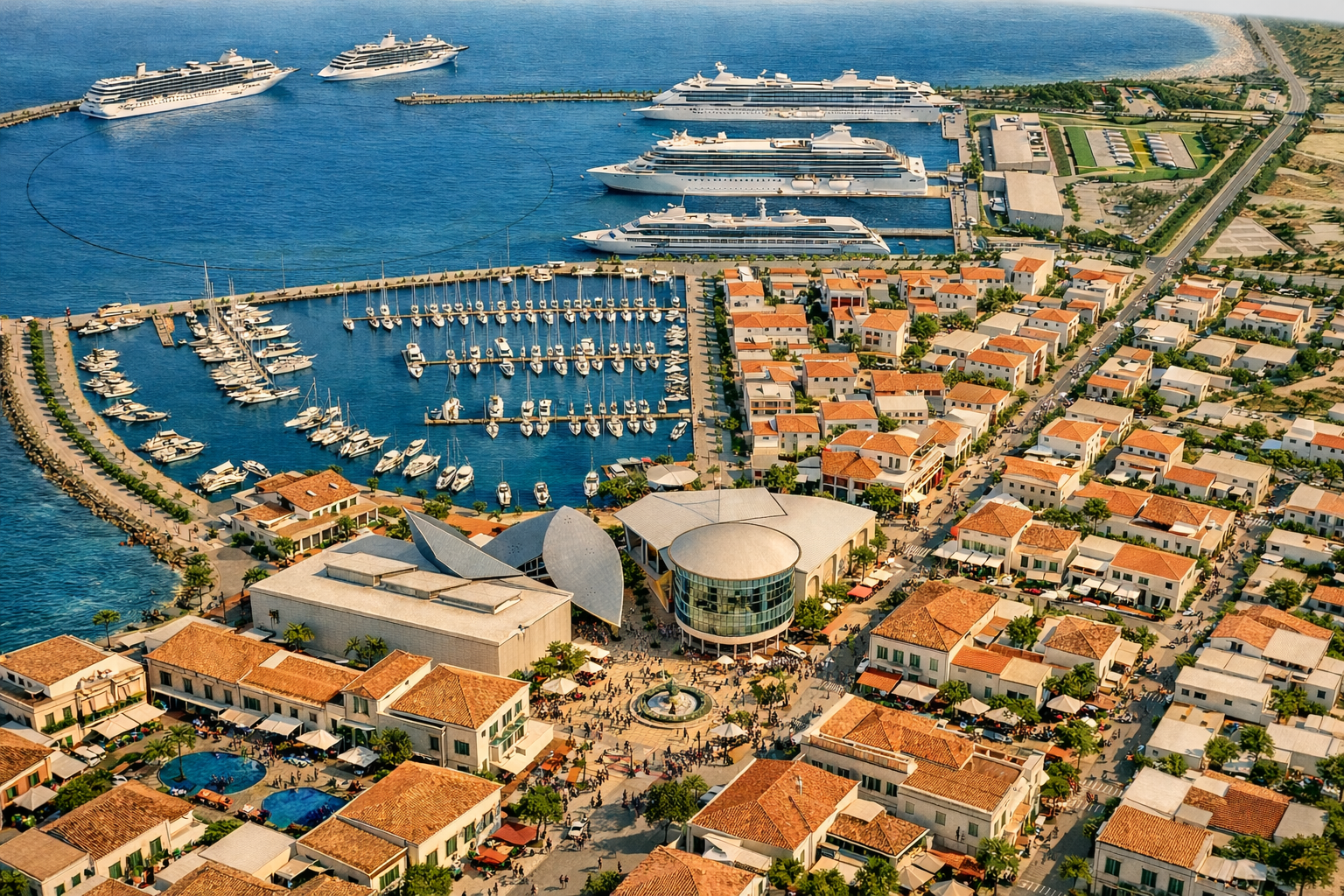
At its heart is the plaza: conceived less as an open void and more as an inhabited field. Stone paving worn smooth by time, café terraces pushing into pedestrian flows, fountains that offer both orientation and relief, these are the instruments of activation. By sunset, long shadows from campanile-like volumes and sail masts stretch across the square, turning the ground plane into a dynamic register of daily life. The architecture frames this space with restraint: limewashed walls, terracotta roofs, deep reveals, and arcaded edges that mediate between interior coolness and the warmth of the public realm.
The waterfront promenade extends this civic life along the marina’s edge. Palm-lined walks, informal seating steps, and market terraces create a slow threshold between land and sea — a place to linger, not just pass through. Working slips and leisure berths coexist, allowing fishing craft, sailboats, and visiting yachts to animate the basin throughout the day, reinforcing the authenticity of a harbor that is still in use.
Materially, the palette is deliberately regional: honed limestone, cobbled stone bands, weathered timber docks, and sun-faded plaster. Landscape strategies draw on Mediterranean precedents, drought-tolerant groves, cypress allées, citrus courts, and low maquis plantings to create microclimates that temper wind and glare while reinforcing seasonal change.
The result is not a resort enclave, but a living waterfront district, where the plaza operates as the town’s living room, the marina as its front porch, and the promenade as its daily ritual. Here, infrastructure gives way to intimacy, and the edge condition between city and sea becomes a stage for public life.
Will lead the design and master planning of the Fiumicino Waterfront while at LandDesign.