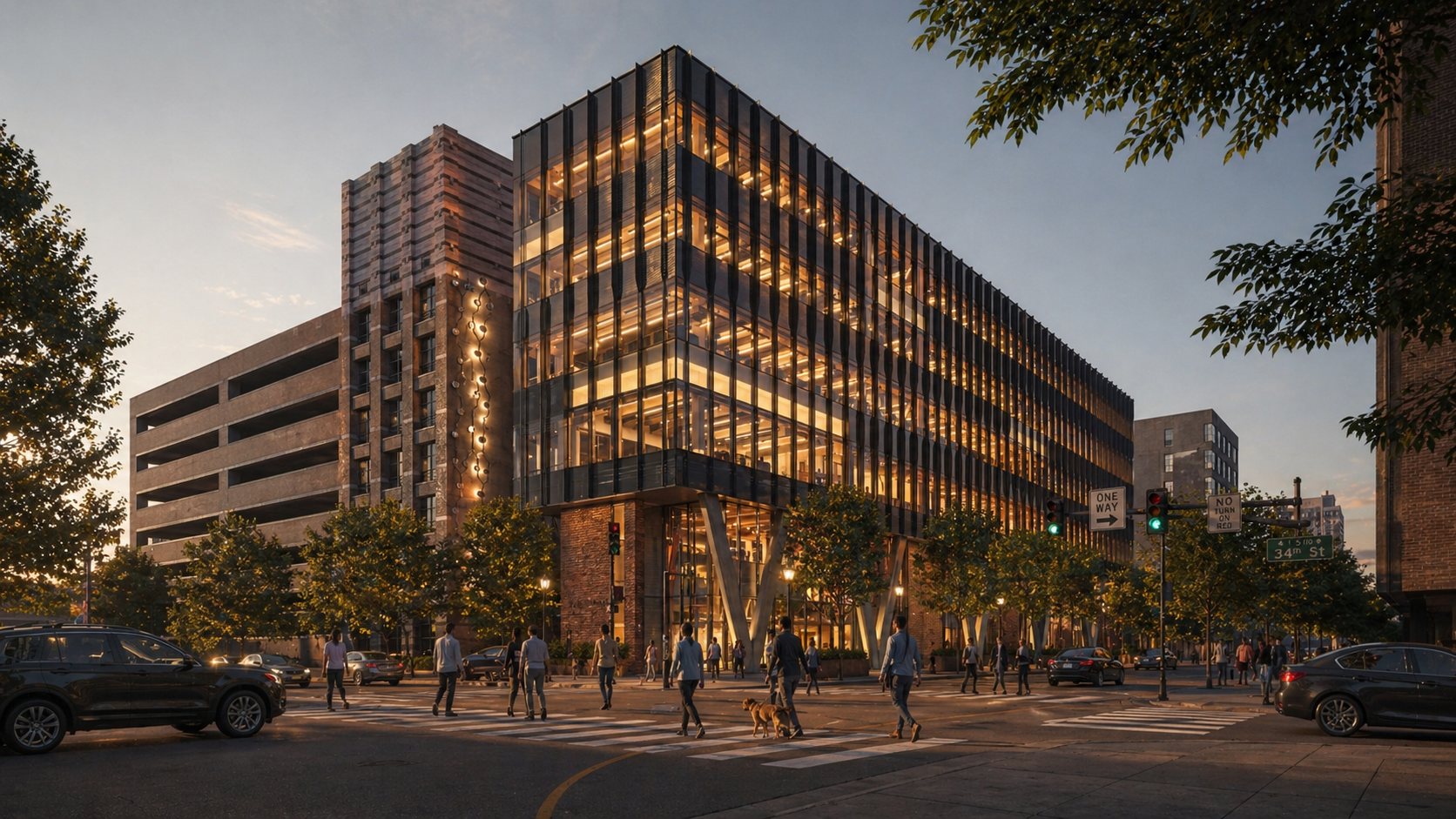
Amy Gutmann Hall at the University of Pennsylvania Philadelphia, PA / 2024
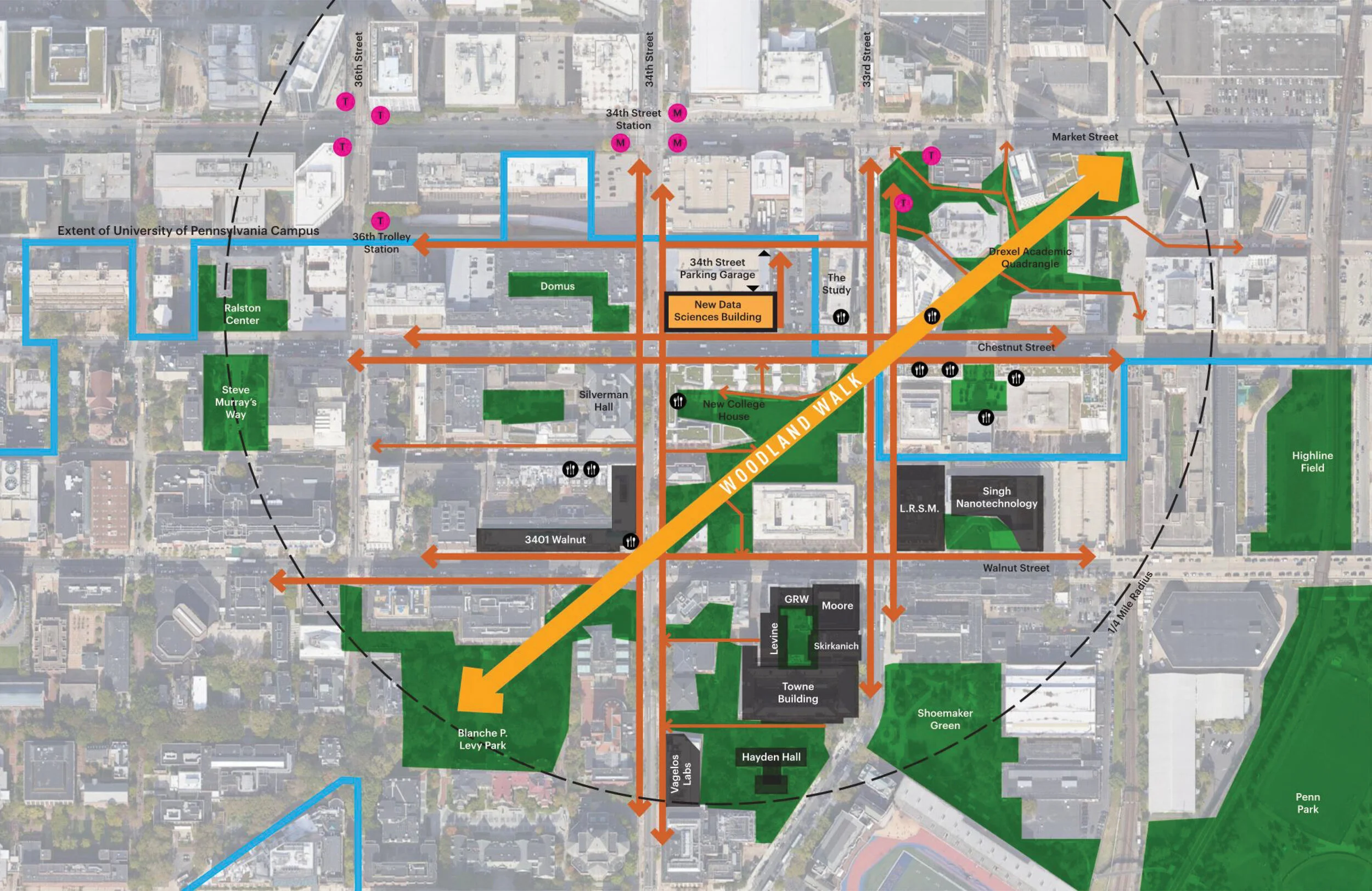
Amy Gutmann Hall will serve as a hub for cross-disciplinary collaborations that harness research and data across Penn's 12 schools and numerous academic centers. Including active learning classrooms, collaborative spaces for student projects, and a data science hub for the entire Penn community, upon completion, the Data Science Building will centralize resources that will advance the work of scholars across a wide variety of fields while making the tools and concepts of data analysis more accessible to the entire Penn community. This building will replace the current parking area at 34th and Chestnut Streets.
Ground Level Streetscape
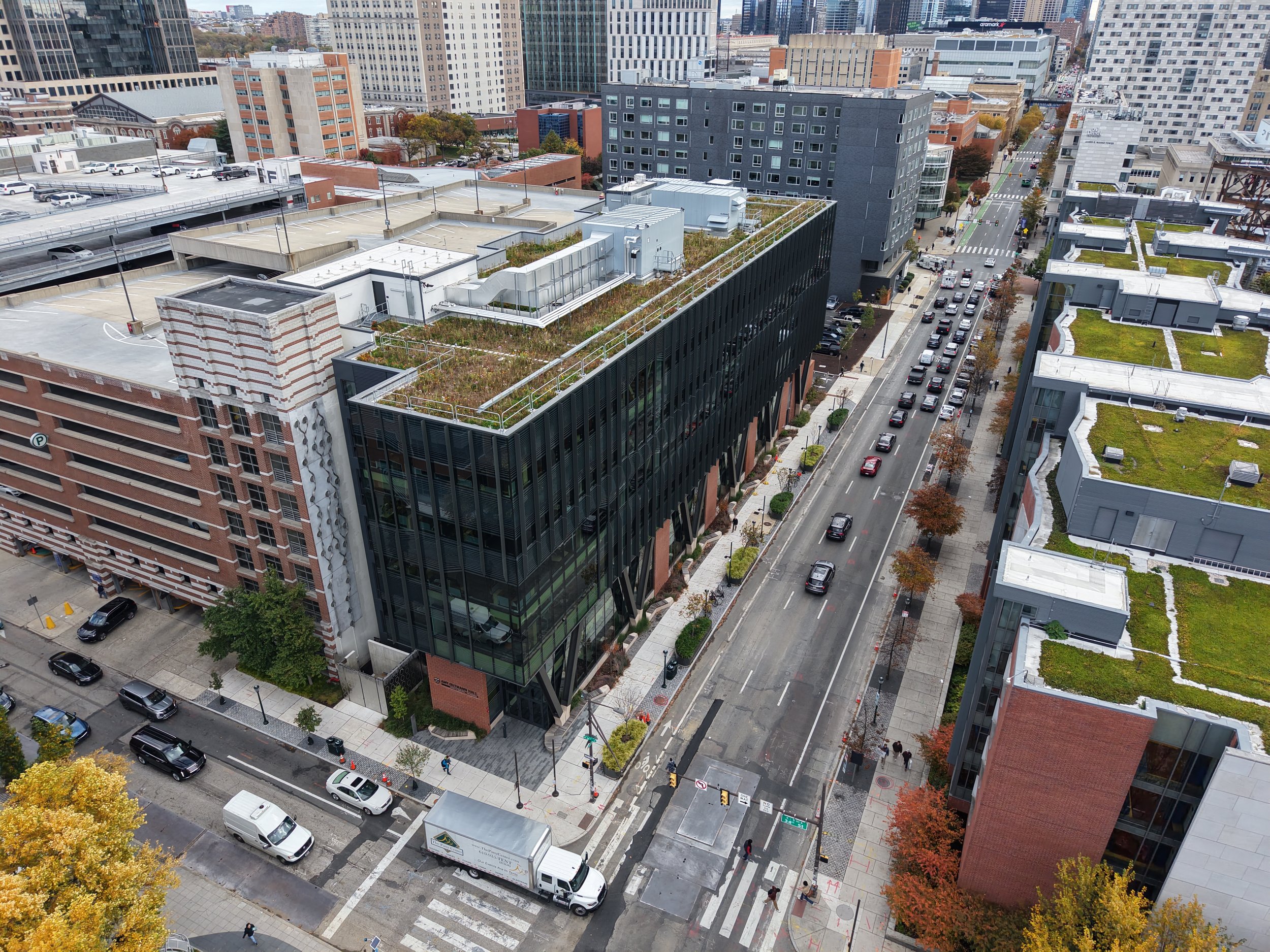
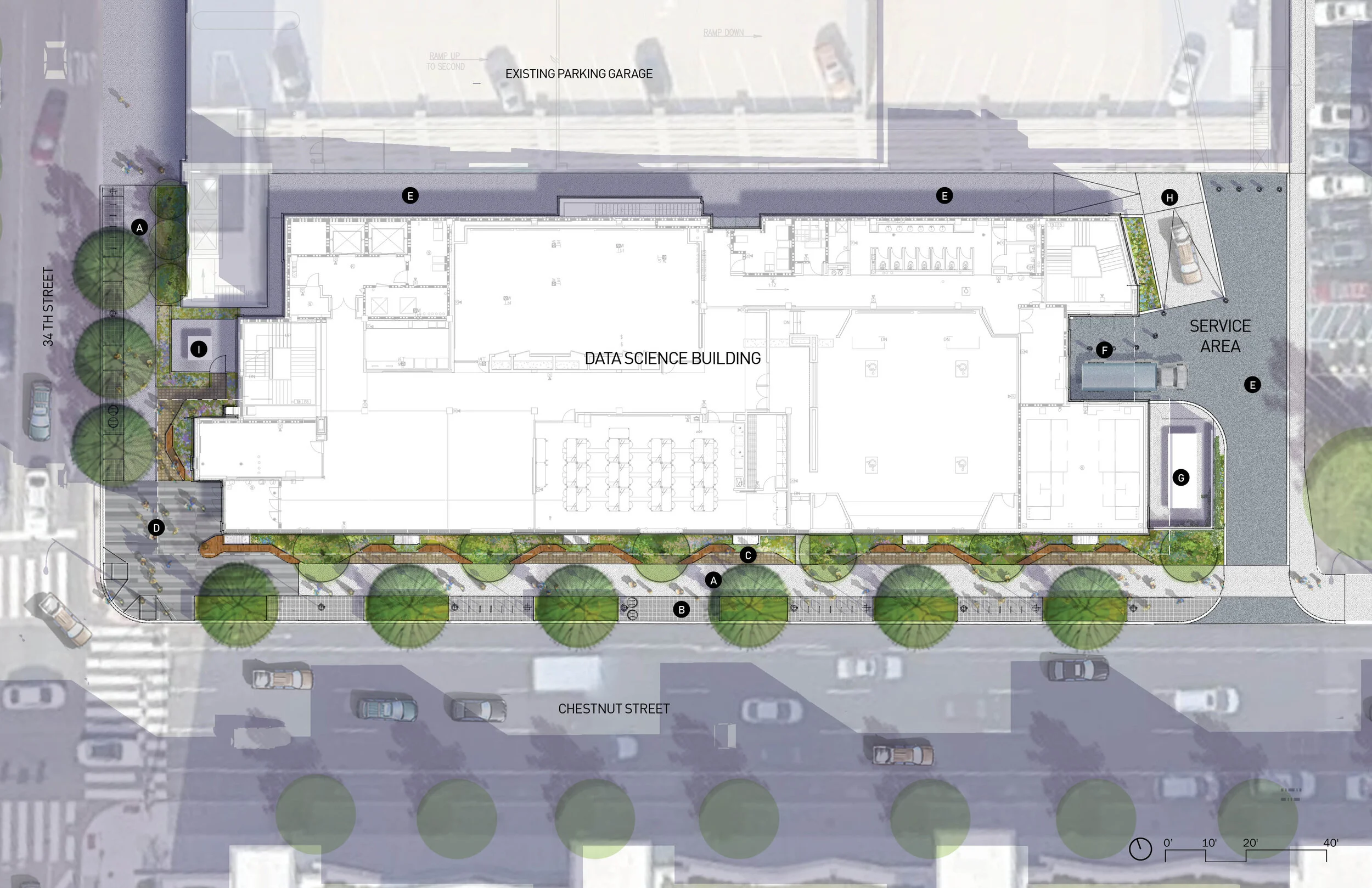
The streetscape design for Amy Gutmann Hall transforms a challenging edge condition into a finely tuned urban room — a linear civic space that mediates between architecture, infrastructure, and pedestrian life. Bounded by heavy campus circulation and constrained by an underlying steam tunnel, the design required a fully custom system of raised metal tree planters, engineered to accommodate soil depth, root volume, and structural loading without compromising subsurface utilities.
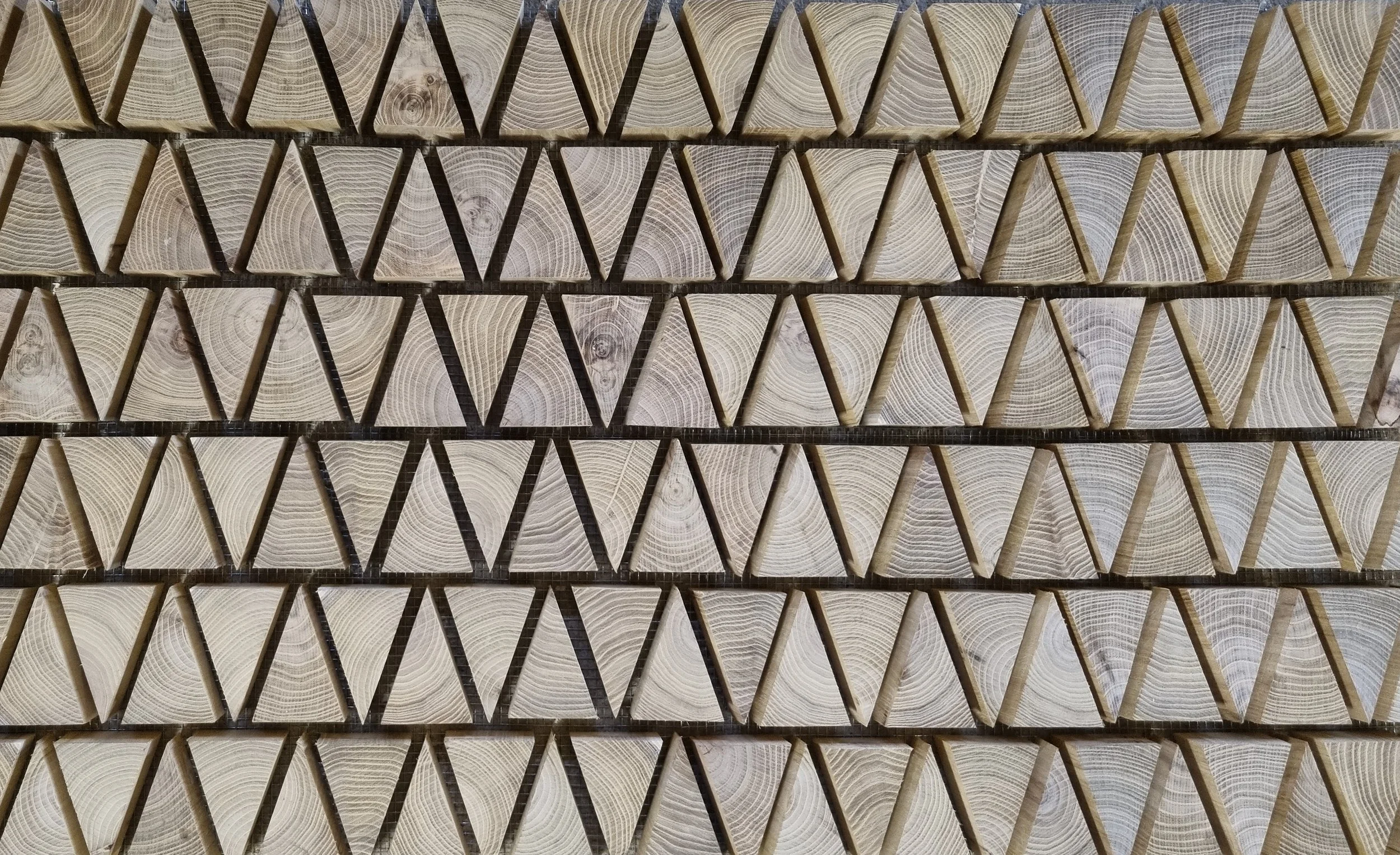
Within this carefully choreographed section, thermally modified ash benches provide warm, tactile contrast to the metal planters and surrounding pavement. Each bench was custom-fabricated to align with tree spacing, creating a continuous sequence of social thresholds — places to pause, meet, and observe.
The ensemble of planters, trees, and benches defines a protected pedestrian corridor while maintaining full accessibility and sightlines. Together, these elements create a sense of enclosure and continuity, transforming the corridor into a linear outdoor room that extends the building’s architectural order into the public realm. The result is a streetscape that performs as both infrastructure and experience — resilient, precise, and distinctly urban.
Rooftop Pollinator Meadow
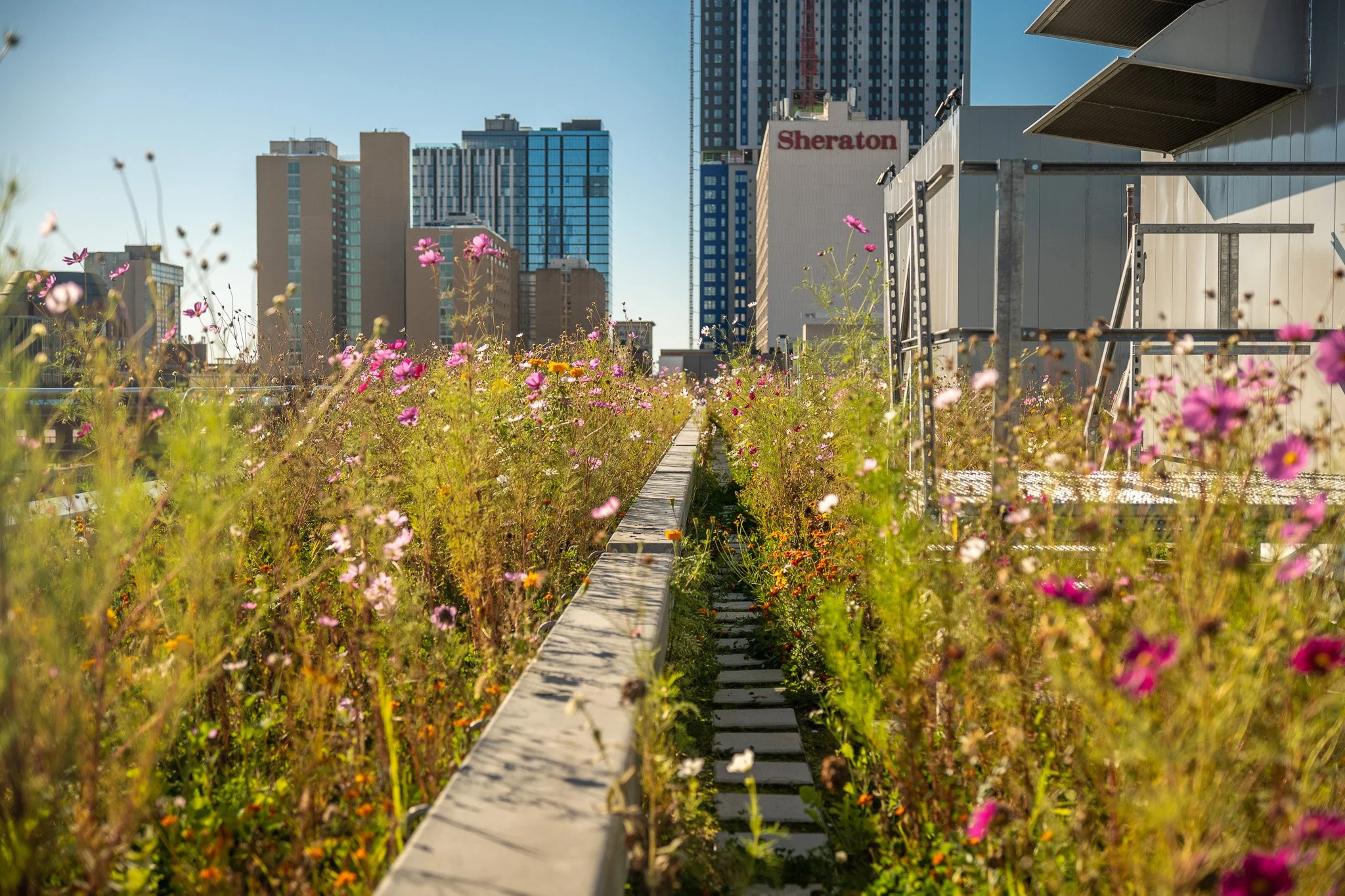
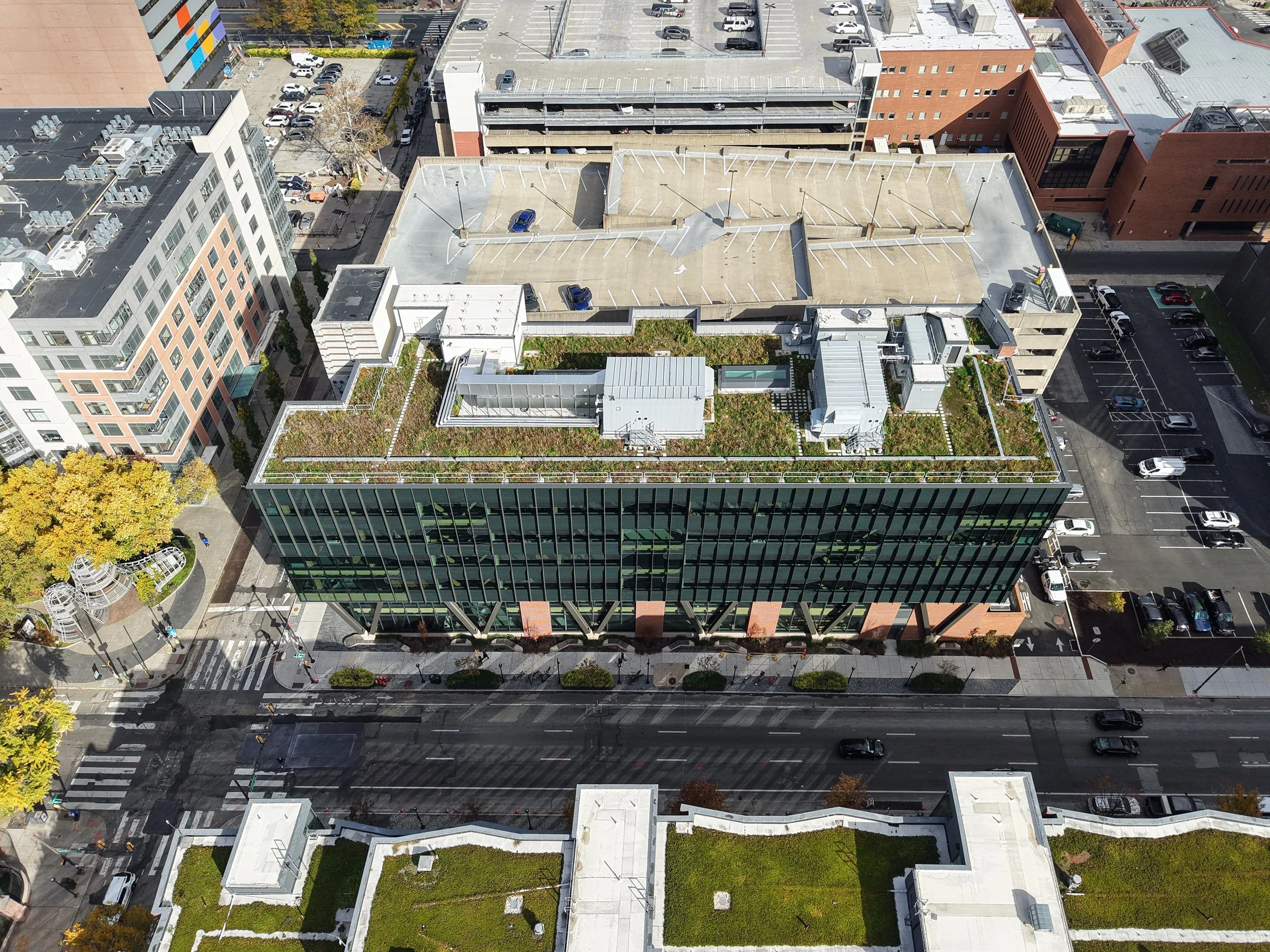
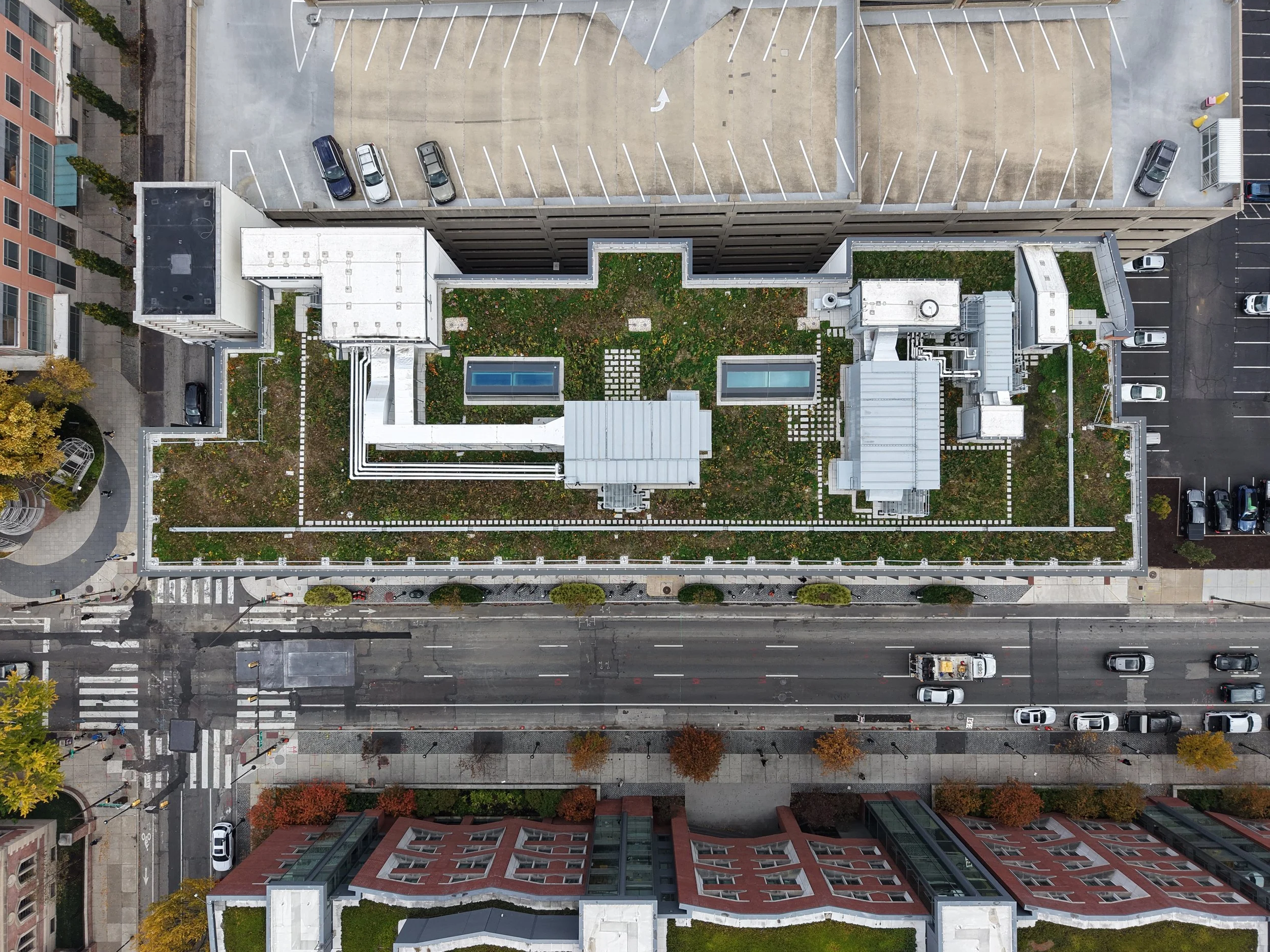
The green roof atop Amy Gutmann Hall introduces a new benchmark for urban ecological infrastructure in Philadelphia: a 3-inch-depth pollinator meadow, the first of its kind in the city. Conceived as both research landscape and environmental system, the roof demonstrates how minimal soil profiles can sustain meaningful biodiversity and stormwater performance within the constraints of a dense urban campus.
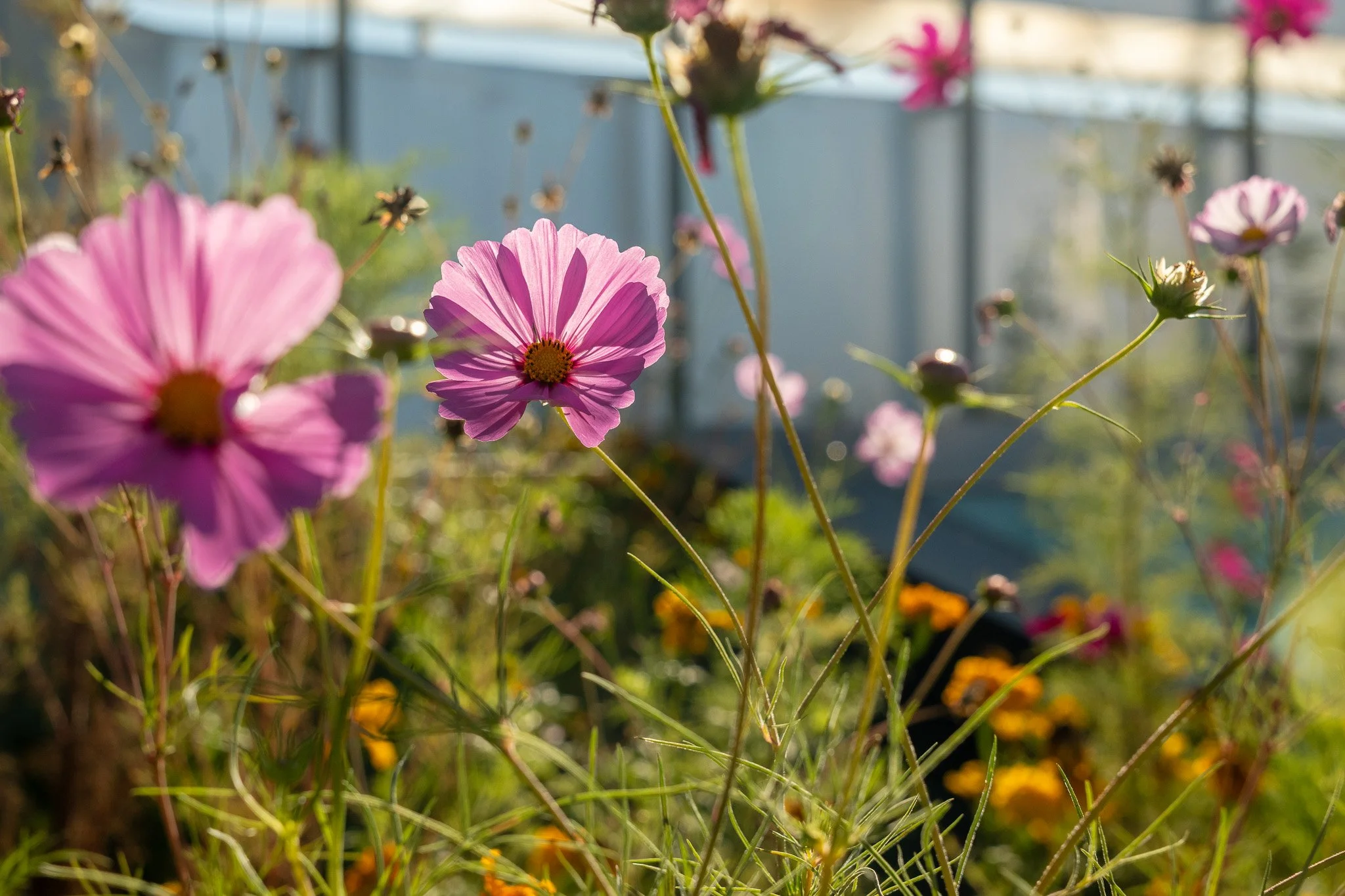
The design employs a custom lightweight growth media, supporting a matrix of native and adaptive forbs and grasses selected for shallow rooting, drought tolerance, and seasonal variation. This resilient planting supports critical pollinator species while reducing heat-island effect and capturing stormwater at the source.
Beyond its environmental metrics, the meadow operates as an extension of Penn’s research and teaching mission—offering opportunities to study pollinator behavior, green roof ecology, and climate adaptation strategies. Its visibility from interior spaces reinforces the connection between mass-timber innovation and living systems, positioning Amy Gutmann Hall as a model for regenerative design in higher education.
Visually, the meadow field ripples across the rooftop, creating a living carpet of grasses and wildflowers that changes with the seasons — soft golds and browns in winter, fresh greens in spring, bright blooms in summer. This rooftop meadow exemplifies a “performative landscape” — one that does more than decorate. It helps regulate temperature and rainfall, supports biodiversity, showcases Penn’s leadership in sustainability, and invites curiosity and education. For faculty, students, and visitors, it offers a living laboratory: a place to observe pollinator behavior, study micro-climates, and reflect on our relationship with nature in an increasingly urbanized world.
In combining pragmatic constraints with design ambition, the pollinator meadow atop Amy Gutmann Hall sends a clear message: buildings need not be inert shelters — they can become active participants in the ecological systems of place. Here, the rooftop meadow bridges architecture, engineering, landscape ecology and teaching. It is, in short, a horizon-bringing garden — altitudinal, urban, and alive.
Client | The University of Pennsylvania
Design Architect | Lake Flato
Architect of Record | KSS Architects